

Contact Us
By 2026, global enterprise AI spending will cross 2.5 trillion dollars, growing at 44 percent annually making it the largest concentrated capital deployment in technology history, according to Gartner’s AI Spending Guide. Yet a striking share of that investment is not delivering expected value. The reason is not the AI. It is what happens after the AI is built.
Gartner’s 2025 Hype Cycle for Generative AI indicates that enterprise AI priorities are shifting from model experimentation toward scalable deployment, AI engineering, governance, and operational integration. Lenovo–IDC research reported that 88 percent of AI proof-of-concepts fail to scale into enterprise-wide deployment, reinforcing that deployment complexity and operational integration remain greater barriers than model development. The last mile is still where enterprise AI value disappears.
“The challenge fundamentally changes. The question is no longer whether the model generated a strong answer. The question is whether the agent can act safely, observably, and within enterprise policy.” - IBM Think
According to McKinsey’s 2025 State of AI report, organisations that operationalise AI through workflow redesign and enterprise-scale integration are substantially more likely to achieve measurable business impact from AI initiatives. The bottleneck is not computational. It is human.
"AI adoption is fundamentally shaped by the readiness of both human capital and organizational processes, not merely by financial investment,” said John-David Lovelock, Distinguished VP Analyst at Gartner.
Enterprise environments represent decades of accumulated complexity like legacy systems, proprietary data formats, compliance frameworks written before AI existed. Deploying AI into this reality demands skills that building models does not teach; domain translation, adaptive problem-solving, stakeholder communication, and real-time engineering for constraints no playbook anticipated. These cannot be automated. They require human judgement and human presence.
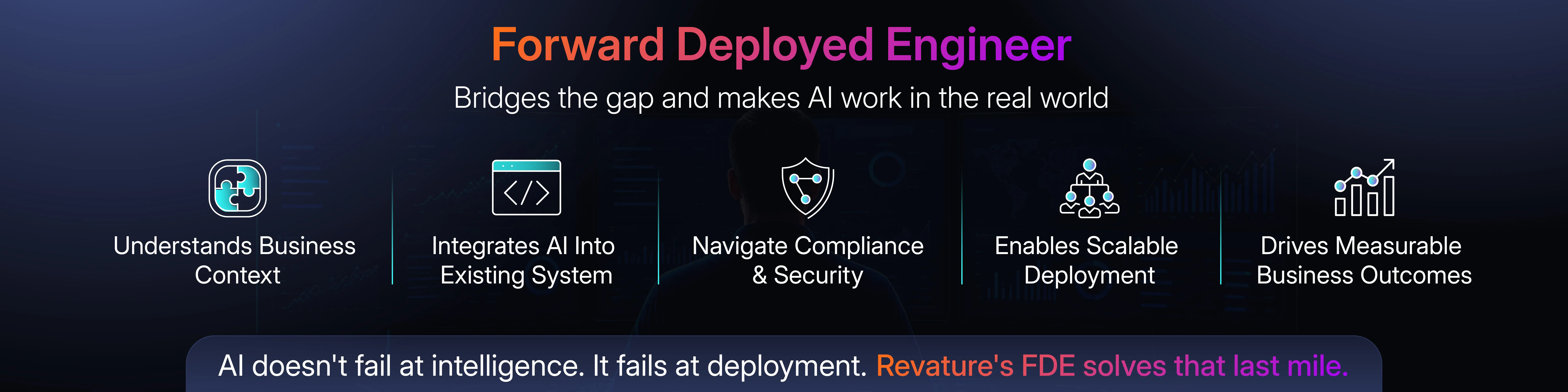
The Forward Deployed Engineer is the structural answer. Business Insider's 2026 analysis of in-demand technology roles named the FDE one of the top jobs of the year, with demand surging across AI platforms, financial services, and healthcare. The Times of India identified FDEs as Silicon Valley's new AI middlemen, suddenly indispensable across San Francisco, New York, Seattle, London, and Bengaluru.
The FDE is not a solutions engineer or a technical account manager. It is the engineer who operates post-sale inside the customer's live production environment, writing real code, designing custom integrations, making AI work in contexts it was never designed for. Palantir invented the role in the mid-2000s for classified government deployments. OpenAI, Anthropic, Databricks, and Stripe have all formalised it since. In 2026, Stripe introduced Forward Deployed AI Accelerators embedded within operational teams, reflecting the growing industry emphasis on bridging the gap between AI capability and real-world organisational implementation. The reason is always the same: the last mile demands it.
Levels.fyi compensation data from 2026 indicates that US-based Forward Deployed Engineers commonly earn total compensation exceeding $200,000, while senior practitioners at leading AI-native firms can command packages above $350,000. Recent TSIA research highlights that enterprise technology firms are increasingly struggling to build Forward-Deployed Engineering capabilities as demand for AI implementation expertise continues to outpace available talent. The skill set required are production engineering depth, deployment fluency, domain translation, communication under pressure. It appreciates over time. As AI grows more capable, the engineer who deploys it grows more valuable.
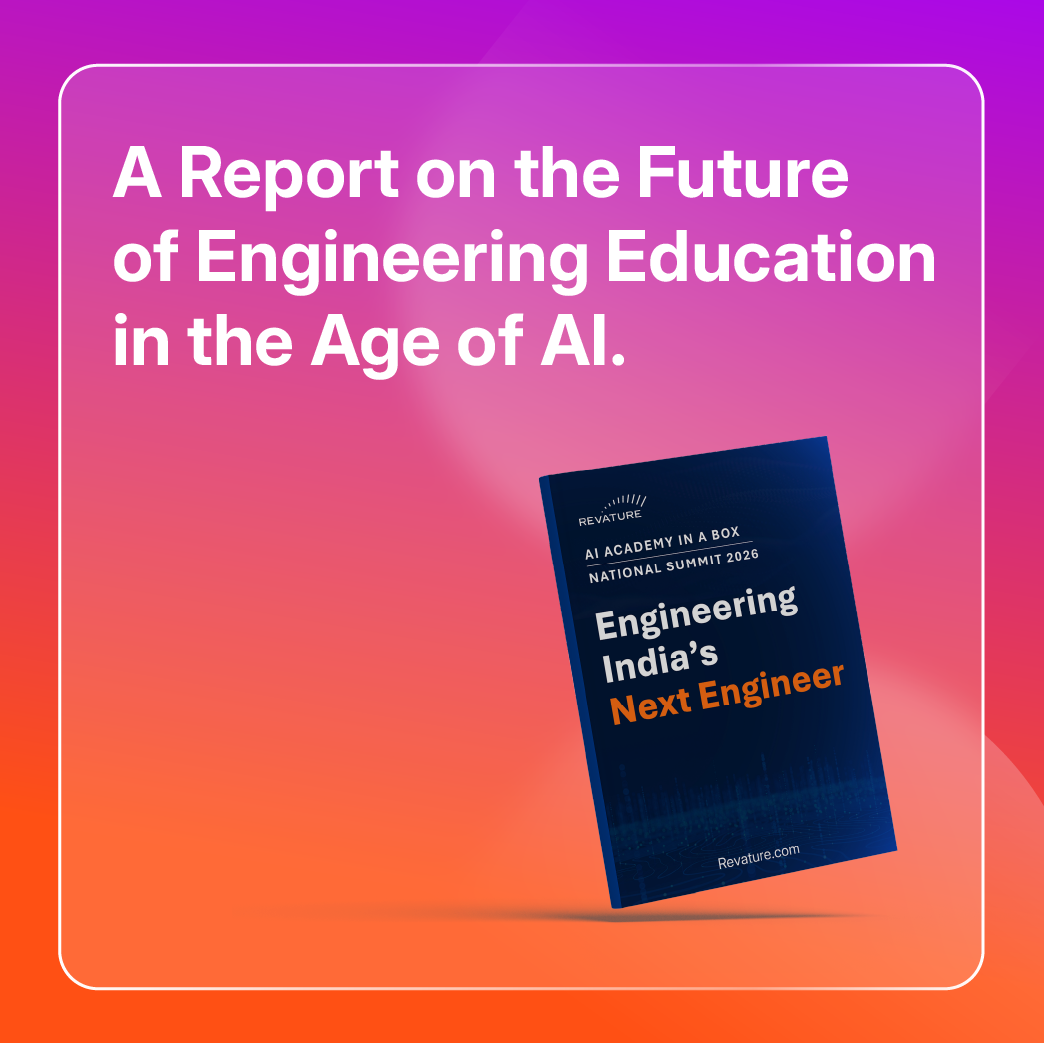
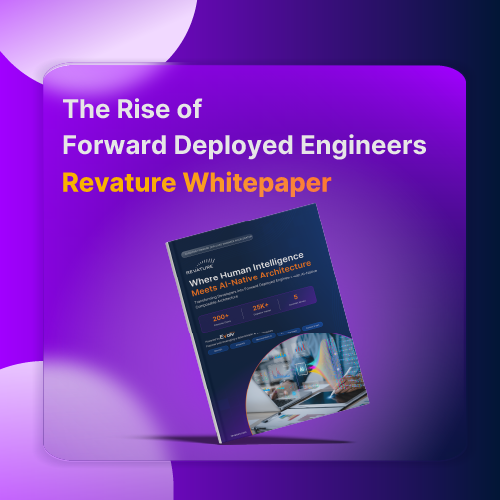
The $2.5 trillion AI opportunity will ultimately belong to organisations that can successfully deploy AI inside real operational environments. Recognising this shift, Revature is expanding its focus toward enabling enterprises with Forward Deployed Engineering talent capable of accelerating AI integration, deployment, and adoption across complex business systems. As AI moves from experimentation to enterprise execution, deployment expertise is becoming one of the most valuable capabilities in the technology workforce. These industry shifts and the emerging strategic importance of Forward Deployed Engineering are explored in greater depth in Revature’ s latest whitepaper on enterprise AI deployment and workforce transformation.

Share








.webp)
.webp)
.webp)
.webp)
.webp)



.webp)
.webp)

.webp)
.webp)

.webp)







%25201-03.webp)

-04.webp)

-05%25202.png)















.png)